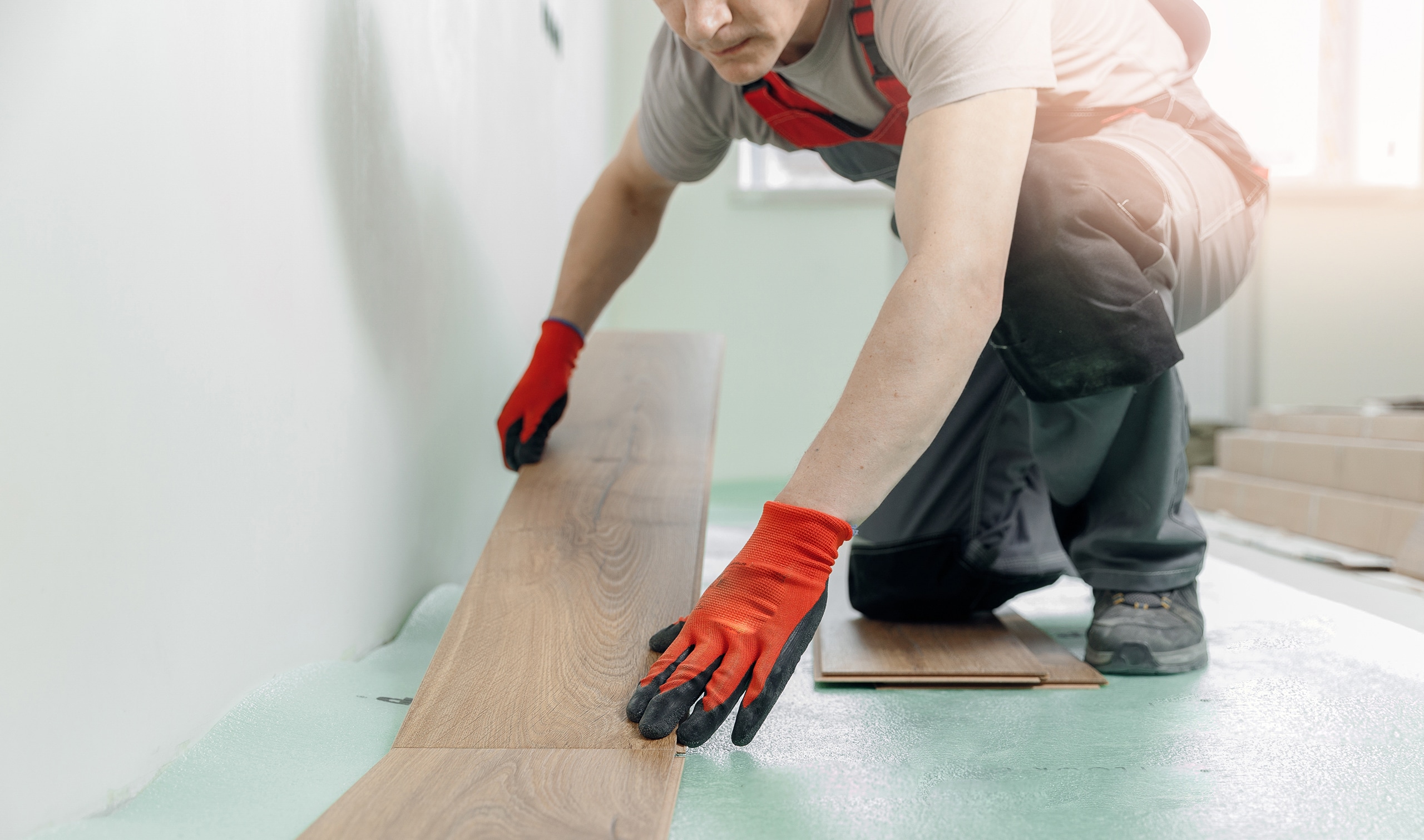
Subfloor repair may be the less glamorous component of flooring installation that no one wants to discuss -- and which nobody wishes to spend money on. It's difficult to determine that it's done, it doesn't photograph well It also adds expenses to a budget which homeowners have typically set their minds to some specific amount. Yet, it's without question, the single key factor to determine if new flooring functions best it can or starts losing its effectiveness within the first few years. The housing stock in Philadelphia consisting of rowhomes and twins, older colonial homes across Bucks County, Delaware County ranches with crawlspaces -- is particularly susceptible for subfloor issues that go undetected until a new floor goes down and is revealed. Here's a few things every homeowner needs understand before installation begins.
1. The Subfloor Is The New Floor Is Essentially Attached To
It's a simple concept, but it gets lost in the excitement when choosing materials. If you're installing nail-down hardwood, glue-down LVP, floating laminate, and porcelain tiles, your finished surface will only be as durable as the foundation beneath it. The subfloor that is soft patches, bends damages, or levels will not go away once the new flooring is applied -as it signals every issue upwards, usually within months. Flooring installers who are licensed evaluate the subfloor before they evaluate any other aspect for this reason.
2. Philadelphia's older homes have subfloor Conditions that are awe-inspiring to contractors.
Homes built before 1960 across Philadelphia, South Jersey, and surrounding counties typically include diagonal boards rather than plywood -- A construction technique that was standard in the era but poses real issues for the installation of modern flooring. Subfloors made of boards are more prone to move, and also include gaps within planks and typically require an overlay of plywood prior to laying tile or hardwood flooring is possible. Contractors who aren't able to flag the issue during their estimate haven't considered it properly, or are trying to circumvent it by using methods that may cause problems later.
3. Soft Spots are a Warning Sign, Not a Minor Anomaly
A swollen spot on your subfloor -- an area which gives slightly when you walk upon it -- is usually an indication of dry rot, moisture damage or delamination of the floor material. Installing flooring over the spot that's soft won't heal it; it hides the problem temporarily, while the damage persists underneath. If you are installing hardwood floors at Philadelphia specifically, soft spots are a direct threat to the nail or staple anchor that keeps the floor in place. Flooring that is lifting or squeaking from the subfloor often can be traced to a area that wasn't treated prior to installation.
4. The variation in level affects every flooring Type in a Different Way
The majority of flooring companies specify a maximum permissible variation in subfloor flatness -- commonly 3/16 of a millimeter over 10 feet. The excess tolerance can affect different materials in a variety of ways. Tile flooring isn't the most susceptible to cracks: high spots fracture tiles, low spots split grout lines, and an uneven subfloor that is covered with large-format stone is guaranteed to be a cause of callbacks. LVP handles minor variations better than the majority, however significant dips or ridges are still visible throughout the course of time. Hardwood communicates irregularities as hollow spots or movement. Subfloor leveling compound or targeted grinding are solutions in a way to solve part of the issue.
5. The moisture in the Subfloor is a distinct issue In Relation to Household Humidity
Both of these are distinct issues requiring separate solutions. Ambient indoor humidity influences how wood flooring expands during the season. Subfloor moisture -and vapor transmission via concrete that wicks through old boards subfloors, or the dampness from a leak directly sever the bonds of adhesive, causing floating floorings to buckle which encourages the growth and growth of mold beneath flooring that is finished. A correct moisture reading prior to floor installation at Philadelphia homes should be an accepted practice. On projects where this isn't completed the contractor has to assume instead of understanding what they're working with.
6. Concrete Slabs need to be tested for moisture before gluing-down installation
Glue-down hardwood and LVP installation on concrete is a common feature for Delaware County and South Jersey properties with slab-ongrade construction. What's less commonly communicated to homeowners is the fact that concrete slabs emit moisture vapor frequently, and the speed can be crucial for the durability of the adhesive. The slab which passes a physical inspection may still fail the calcium chloride or relative humidity test. Flooring adhesive placed over an area with a high emission of vapors will loose its bond -- usually within a year -- and the floor will begin to change, bubble or split.
7. The Subfloor Repair Costs Are Unachievable for estimating without examining
This is the reason reputable flooring contractors won't give you an exact all-inclusive cost at the end of a call. Repairs to subfloors in Philadelphia can vary from a basic patch of wood for $200 up to a few dollars per square foot for an area of vast moisture damage. The only way of knowing that is through a site visit and proper assessment. Owners who insist on a locked-in number before they has even inspected the subfloor, are creating a situation where either the contractor is forced to build in a large amount of contingency or cuts corners if problems show up mid-job.
8. Tile Installation is the Most Ristaking Test of the Subfloor's Integrity
Porcelain and ceramic tile possess no flexibility. They transfer stress directly into the bond underneath them. A subfloor with significant flex can crack grout and tile no matter what level of flexibility the tile itself was set. The most common requirement for tile installation is a subfloor assembly stiff enough that it can meet standard of deflection that engineers refer to as L/360the meaning that a 10-foot swath can not deflect more that 1/3 inches when under loads. Older Philadelphia homes typically fall short on this criteria without reinforcement. Failures to install bathroom tiles in older homes are nearly always caused by subfloor stiffness in disguise.
9. Addressing the Subfloor Now Protects the Refinishing Value later
One of the primary lasting advantages is its capacity to polish and sand it several times over the course of decades. The benefits are lost if subfloor beneath it is compromised. Floor sanding and refinishing for refinishing in Philadelphia requires a solid well-fastened floorwhich doesn't move or flex under the sanding machinery. Subfloor problems that were manageable during the installation process become major issues when refinishing attempts are made years later. A proper repair of the subfloor from early stages will help ensure the floor is safe for any services the floor will require.
10. The Contractors Who Identify Subfloor Troubles Are Those That Are Worth employing.
It's a bit oddanyone doesn't like hearing how their job became pricey before it got started. A flooring contractor who takes a walk around your room, is aware of subfloor problems, and incorporates repairs as part of their work is doing precisely the job a professional should be doing. If they don't mention the issue, or quote a price that is low and begin to lay flooring on subfloors that are in need of repair are the ones who get the bad reviews a few months later. When you're getting estimates for flooring in Philadelphia The quality of the inspection before the quote is given covers everything you'll need to know about how the flooring installation will go. Follow the top
laminate flooring installation Philadelphia PA for blog examples including best flooring contractors Philadelphia, laminate flooring installation Philadelphia PA, wood floor restoration Philadelphia, flooring installation near me Philadelphia, tile flooring installation Philadelphia, waterproof flooring installation Philadelphia, glue down hardwood flooring Philadelphia, hardwood floor installation Bucks County, laminate flooring installation Philadelphia, engineered hardwood installation Philadelphia and more.

Flooring Options That Are Waterproof For Philadelphia Bathrooms
Bathrooms are where flooring decisions are the most vulnerable to error. Every other room in the Philadelphia home is able to withstand any flooring that's not water-resistant but a bathroom can't. Showers' steam, water around toilet bases, splash zones at sinks and the general humidity baths generate daily is a sign of weakness in a flooring material that isn't genuinely waterproof. Philadelphia houses have additional problems including subfloors from the past that already have moisture on them or even bathrooms that weren't updated since the 1970s, and in a lot of rowhomes, bathrooms that are built over a living spaces in which a flooring failure means a ceiling issue downstairs. Here's what actually is working, what's not, and what to ask before putting in any bathroom floor. in.
1. Porcelain Tile Remains the Benchmark Every Other Tile is Compared
There's reason why porcelain tile has remained the top bathroom flooring choice for years -- it is genuinely impervious against water at the tile's edge, able to handle humidity and steam without deteriorating as well, and if installed correctly and grout sealing it can beat all other alternatives even in humid conditions. Porcelain tile installation in Philadelphia bathrooms is the preferred option with the longest-running track record. The downsides are very realthe cold, hard on joints, maintenance of grout required -- however, none other material is able to match its waterproofing capabilities and long-lasting durability in a bathroom setting.
2. Ceramic Tile is a Genuine Option, Not an Alternative to Ceramic Tile
Ceramic and porcelain are frequently mentioned in the same breath, but they're definitely not the same thing in a bathroom context. In terms of their porousness, porcelain is much more durable than ceramic and is important in a bathroom where humidity is not only occasional. For a powder space or a guest bathroom that doesn't get much use, ceramic tile flooring is a viable as well as a more affordable option. For a main bathroom in an Philadelphia home, which is prone to frequent shower usage, the density and resistance to moisture can be worth the cost in square feet. The installation procedure is similar to the performance, but over time isn't.
3. LVP is the most practical Option for Waterproofing Tile
Luxury vinyl plank has truly made its mark in conversations about bathroom flooring. The flooring is 100 percent waterproof. The core doesn't take in water, the surface doesn't break down with the exposure of moisture, and it's warmer and more comfortable underfoot than tile. One of the caveats to install in bathrooms is that the LVP's waterproofing can only be applied on the planks and without necessarily being applied to the seams between the planks. In bathrooms with a lot of water exposure, such as a walk-in shower without a suitable barrier, or a freestanding tub -- water may work across planks until it end up on the subfloor. The correct installation techniques and seam sealing are important more than in any other bathroom.
4. The use of laminate in a bathroom is an Unforgivable Decision
It's important to say this in a clear manner since laminate shows at the bottom of bathroom flooring cost estimates generally due to its lower price point. Laminate has a wood fiber core. Wood fiber and continuous bathroom moisture are not compatible. The edges are swollen, seams expand, and the layer splits, and damaged areas accelerate in bathrooms faster than in any other room in the house. Cheap flooring installation that puts laminate in the Philadelphia bathroom isn't cost-effective, it's an upgrade job that has been delayed by some years. Any flooring contractor recommending laminate as a primary bathroom flooring ought to be questioned about the reason.
5. The Subfloor Below a Philadelphia Bathroom Does Not Need a Comprehensive Assessment
Older Philadelphia rowhomes and suburban colonials often have subfloors for bathrooms that have an existing past water damage, like leak staining and soft spots that result from years of exposure to water or board subfloors from the beginning that have absorbed more than they should over the years. Installing new, waterproof flooring over a damaged subfloor isn't going to fix problems at the root, it is merely covering it up while it continues in deterioration. Repairing subfloors in Philadelphia bathrooms prior to the time that new flooring goes down is not an upsell, but an important requirement for the new flooring to work properly and not fail too early.
6. Floor Heating Compatibility varies by Material
Heating floors on bathrooms -- now popular during Montgomery County and Delaware County home remodeling -- isn't an ideal fit for all flooring types. Porcelain tile carries and holds heat well, making it a perfect floor for a heated subfloor system. LVP is compatible with radiant heat but is subject to temperature thresholds and needs to be respected - excessive heat can result in problems with dimensional stability. If you are considering bathroom floor heating as part of your remodel, the flooring materials selection and the heating system's specifications have to occur in conjunction between them, and not independently.
7. Bathroom Tile Layout Can Affect Both Appearance and Water Management
This is a distinction that is what separates knowledgeable tile flooring contractors from installers who only know how to set tile. Bathroom floors need a slight pitch toward the drain, typically 1/4 inch per foot- to prevent standing water. Tile designs that do not account to this fact, or that competes with it with large format tiles that bridge the slope, leads to the problem of pooling and eventually works into the subfloor. The discussions with your contractor should include how the tile pattern interacts in relation to the location of the drain, in addition to how it appears on paper.
8. Grout Selection in Bathrooms is an Essential Decision
Standard sanded tile in bathrooms needs sealing at installation and periodic resealing throughout its lifespan. Epoxy grout -- harder as well as more costly, but less resilient to installis completely impervious staining, moisture, and water and doesn't require sealing. For Philadelphia bathrooms with tile installation where homeowners require minimal maintenance, epoxy grout is worth more labor costs. For those who will be committing to regular maintenance on grout, standard grout that has been sealed efficiently. What's not working is normal grout that's never properly sealed in a moist bathroom environment.
9. Small Format Tiles Manage Bathroom Floors Slopes Better
The trend to use large format tile, 24x24 or larger -- that work well in living and kitchen areas faces practical issues in bathrooms. Larger tiles are harder to tilt towards drains without creating obvious unevenness. They require subfloors with a flat surface to avoid lippage. Smaller-sized format tiles (12x12 and lower and particularly mosaic tiles can follow the curves of the bathroom floor better, can manage the drain slope more gracefully, and provide greater grout lines, which improve slip resistance when wet. Philadelphia tile flooring professionals who have extensive experience in bathroom design will be able to discuss this before they make their layout choices.
10. Bathroom Flooring and Wall Tiles Need to be specified together
A mistake that leads to regrets of the aesthetic more than it does functional issues, but it's worth it to be avoided in both cases. The bathroom floor tile and the wall tile interact visually in a constrained space in ways which can be difficult to discern from samples alone. Scale, pattern, grout color and finish all must be taken into consideration together. Flooring contractors who also handle bathroom tile installation Philadelphia work could coordinate this. The ones who just handle flooring work and leave wall tile to a separate contractor can create situations where the finished room looks like two different individuals made the decisions independently - because they did. Take a look at the top See the recommended LVP flooring installation Philadelphia for blog info including nail down hardwood flooring Philadelphia, hardwood floor resurfacing Philadelphia, custom hardwood staining Philadelphia, floor sanding and refinishing Philadelphia, floor installation Bucks County PA, hardwood floor refinishing Philadelphia, affordable flooring installation Philadelphia, flooring installation Montgomery County PA, hardwood floor refinishing cost Philadelphia, flooring installation cost Philadelphia and more.